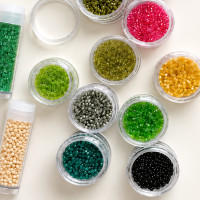


Choosing seed beads is about more than just picking colours. The price of the material depends directly on the quality of calibration — the manufacturer's ability to keep every single bead to the same standard of size and shape. This is what matters most: it decides whether your piece will keep its geometry or warp as you stitch.
Czech Seed Beads: The Golden Mean
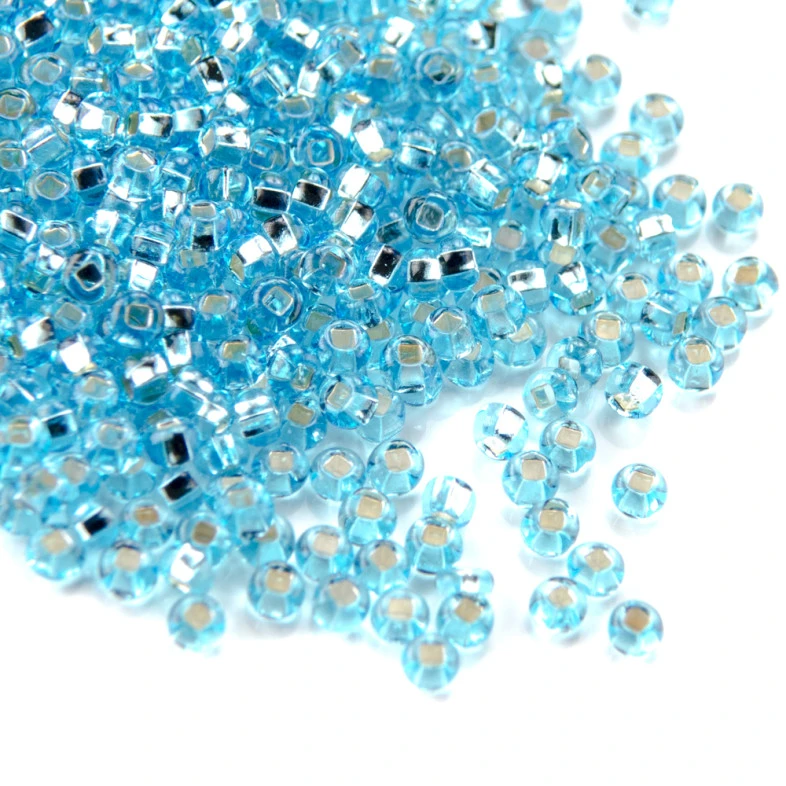
Czech seed beads are made by Preciosa Ornela in Jablonec nad Nisou — a region with centuries of glassmaking tradition. The technique is classic: a glass tube is drawn out, cut into segments, then rounded and polished while still hot. The result is a slightly flattened, doughnut-like shape with soft, rounded edges.
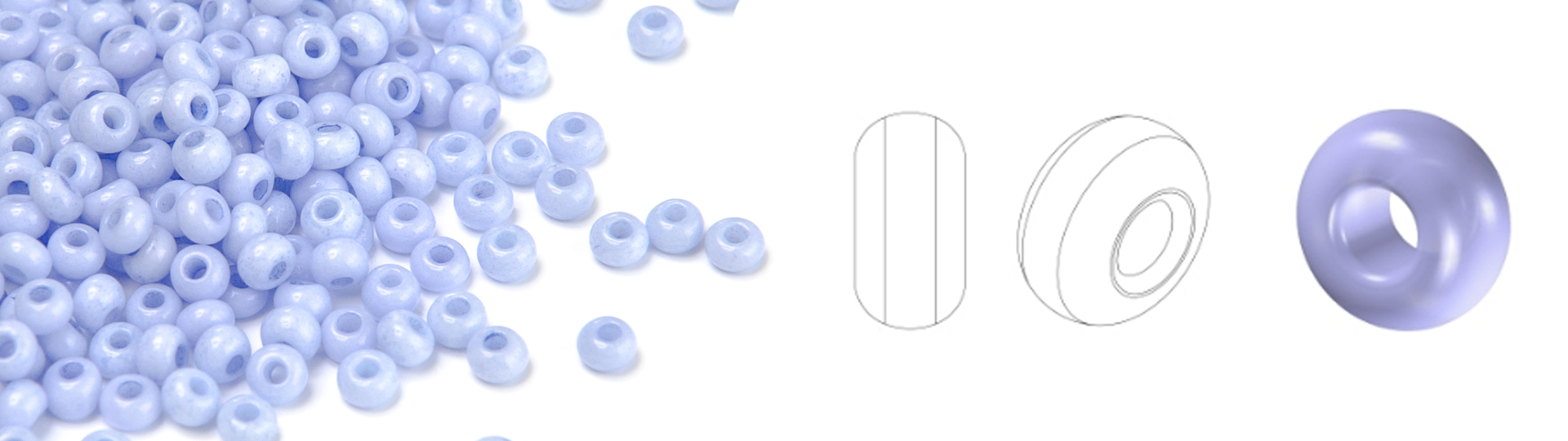
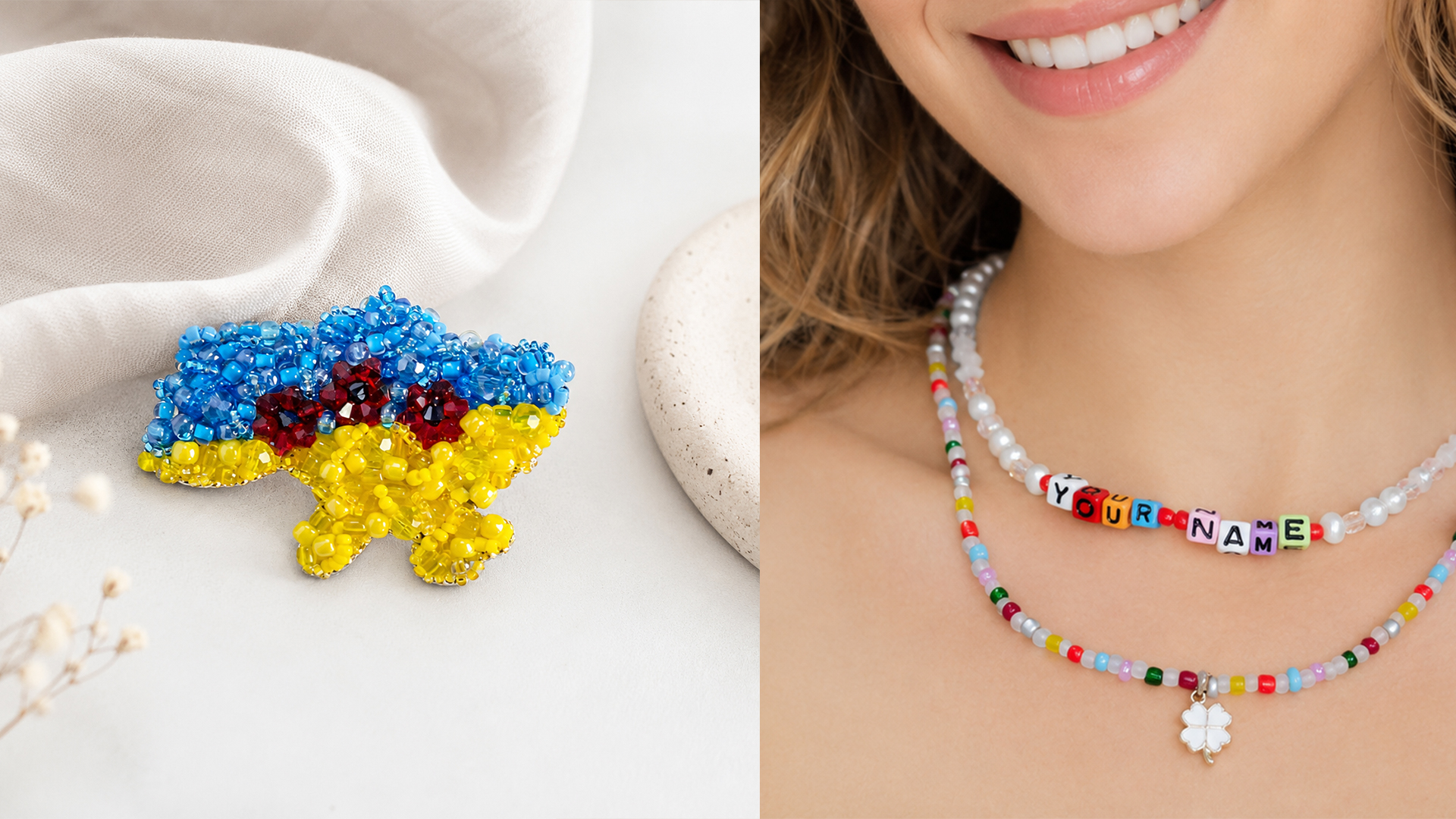
They are the classic choice for bead embroidery, French beaded flowers and traditional Slavic techniques such as gerdans and sylyankas (Ukrainian beaded necklaces). Slight natural irregularities in shape do no harm here — in fact, they give the work a lively, handcrafted look.
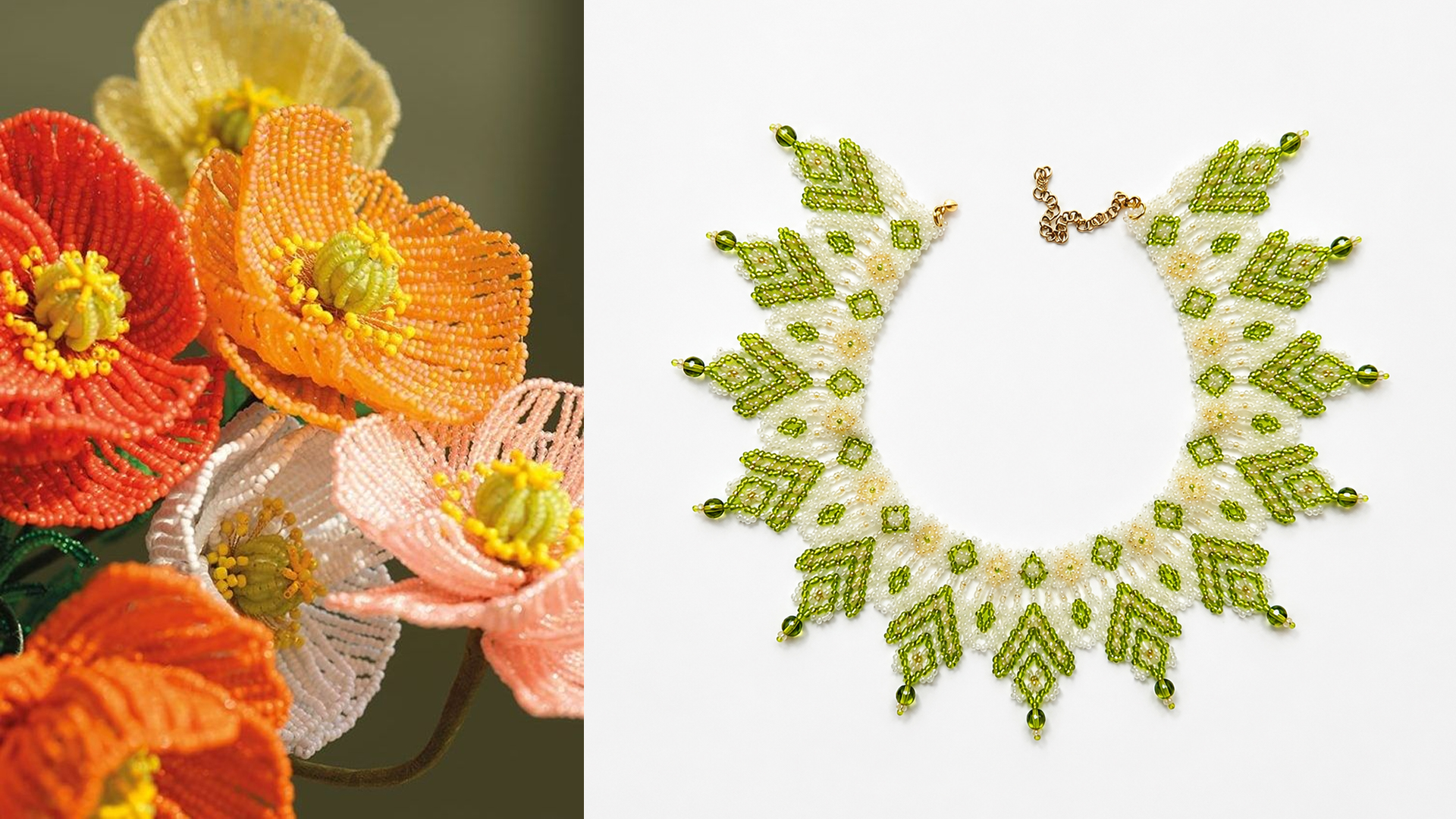
Thanks to its huge range of colours, Preciosa is often the go-to base for complex colour gradients. Its palette of colours and finishes is one of the largest on the market: matte, galvanized, pearl and silver-lined.
Japanese Seed Beads: The Benchmark of Precision
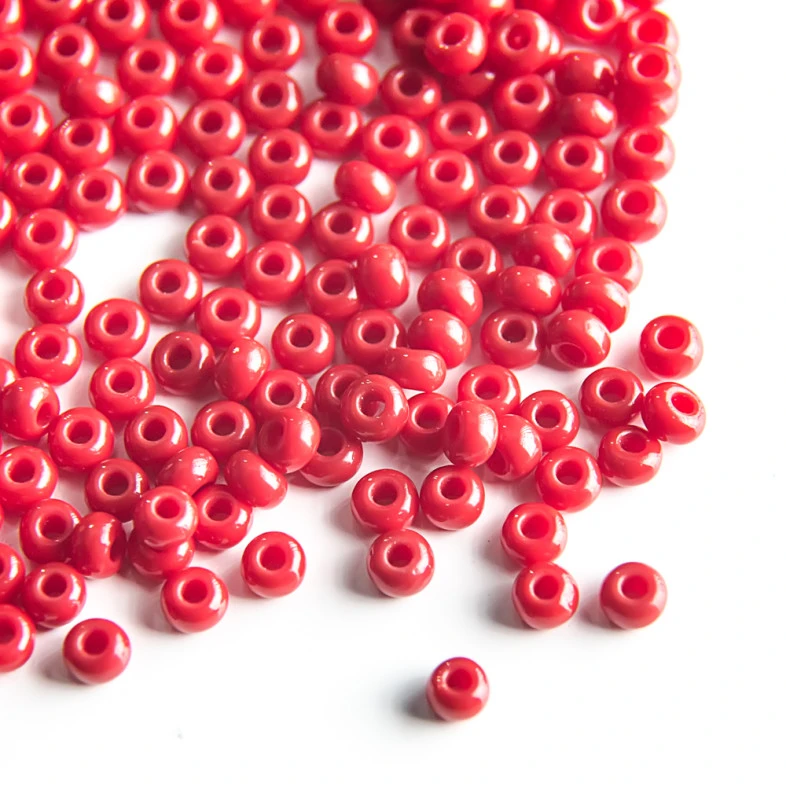
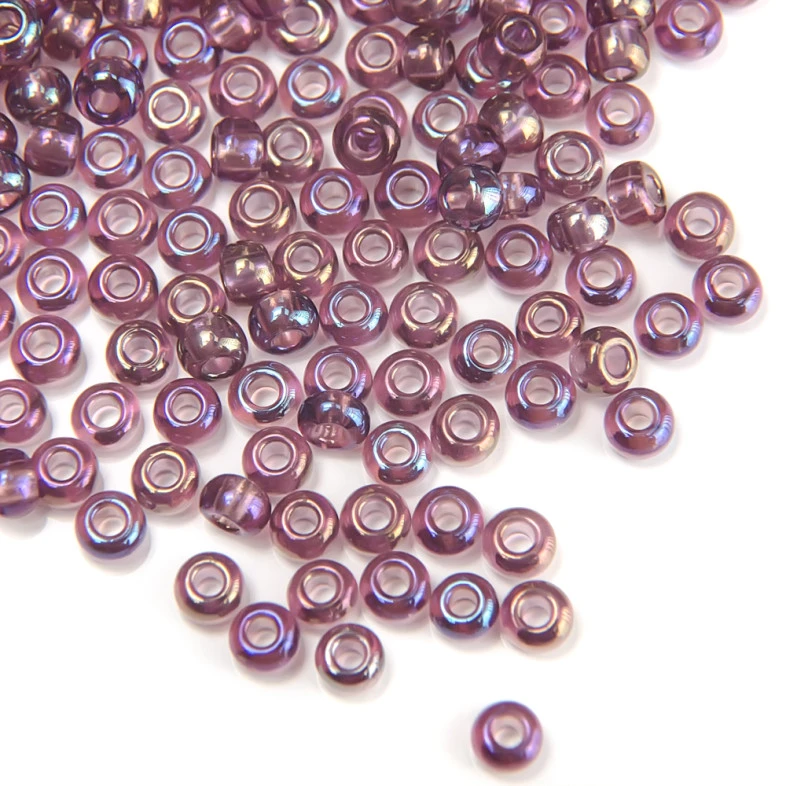
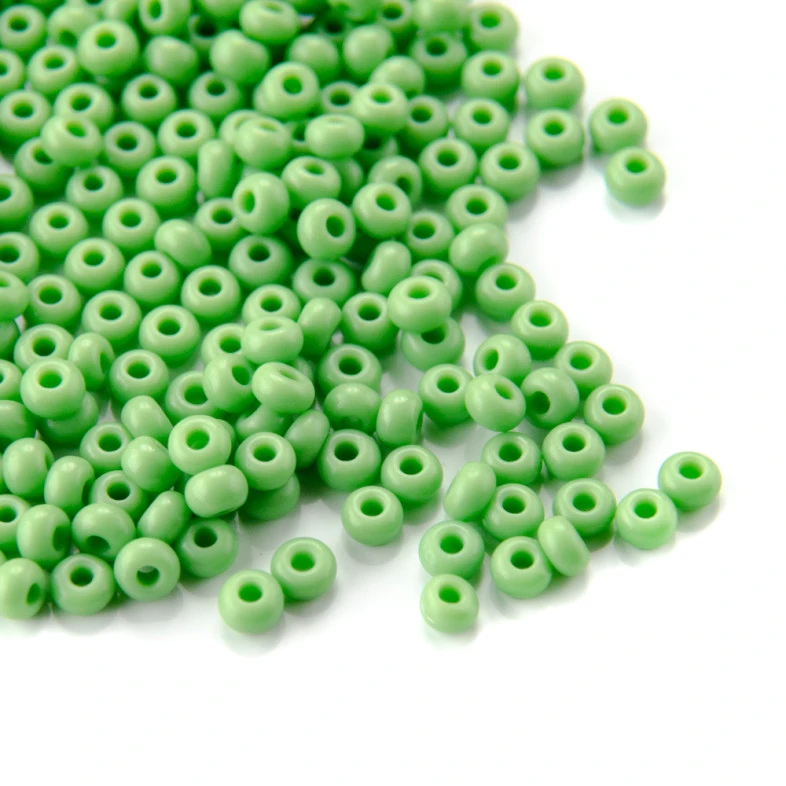
The world of Japanese seed beads rests on two key brands — Miyuki and Toho. They maintain their status as the global quality standard through multi-stage quality control at every step of production, so the share of defective beads in a finished batch is minimal. And thanks to their large holes, thread or fishing line passes through each bead several times with ease, so finished pieces turn out lighter.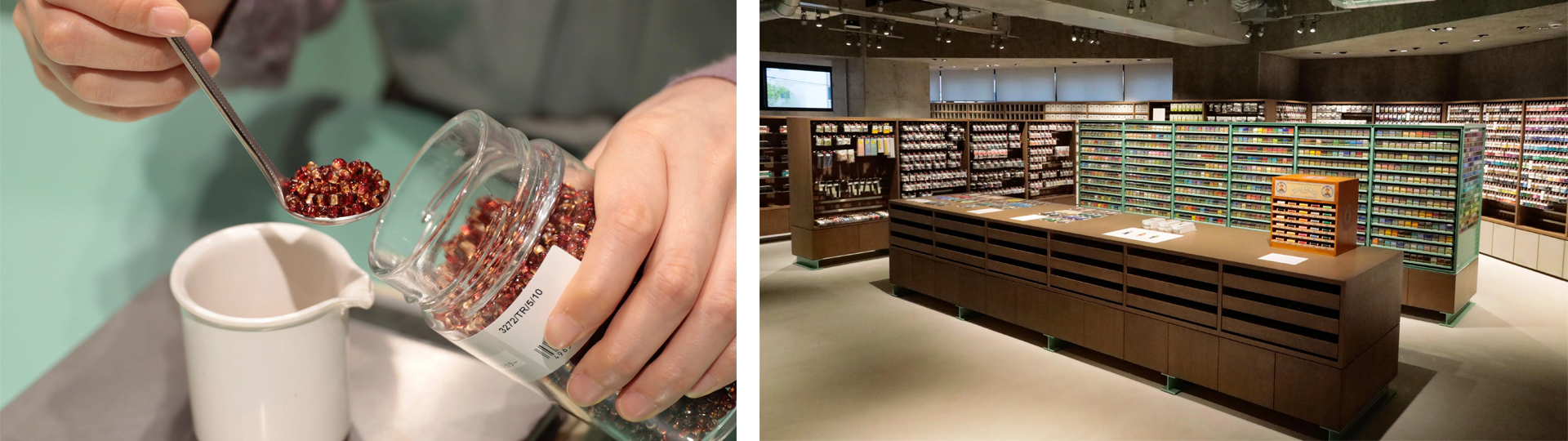
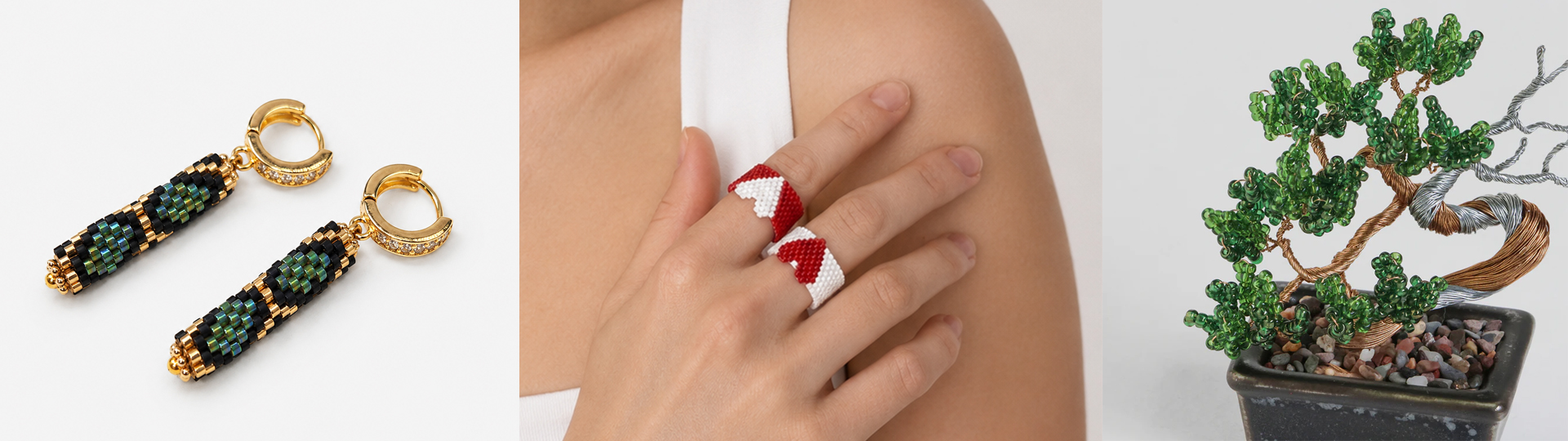
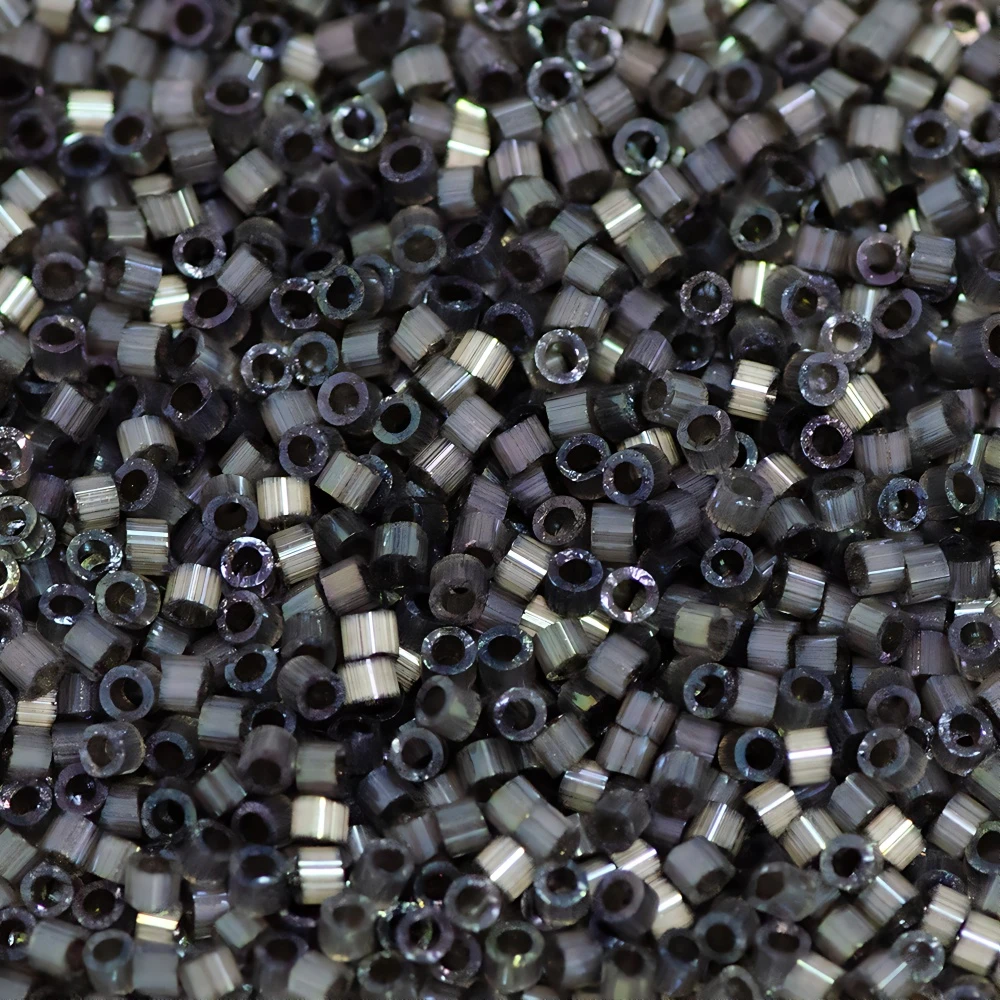
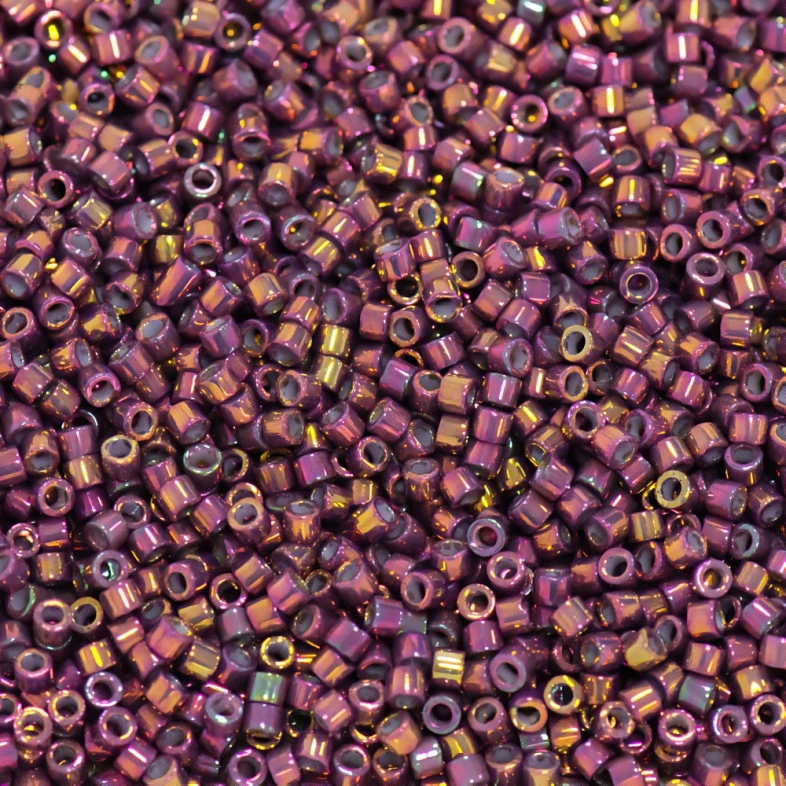
But the true hallmark of Japanese production isn't the round rocaille — it's a separate type of bead altogether: the cylinder bead. Unlike the classic doughnut shape, these are perfectly even glass "tubes" with no rounding at the edges. It's this geometry that has made them the standard for "pixelated" beaded images and dense beadweaving, where every row has to sit exactly on top of the one before.
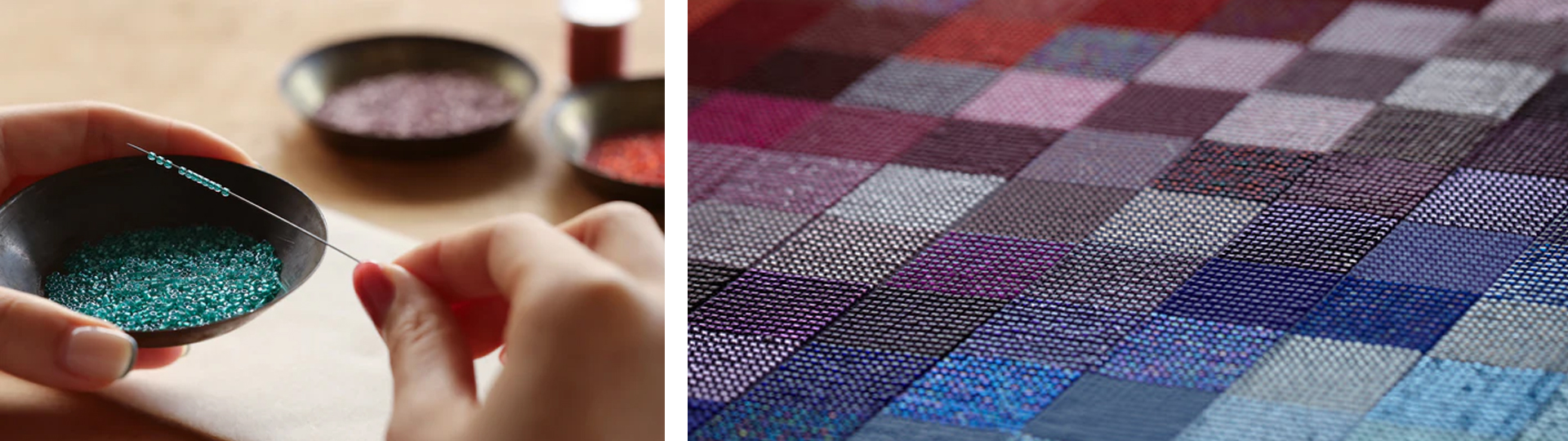
There are several product lines of cylinder beads: Miyuki Delica — the most popular cylinder beads in the world. Toho Treasures — a standard-quality alternative to Delica. Toho Aiko — a premium line the manufacturer describes as "micro-calibrated": according to the brand, the variation between beads is so small that there's almost nothing to cull.
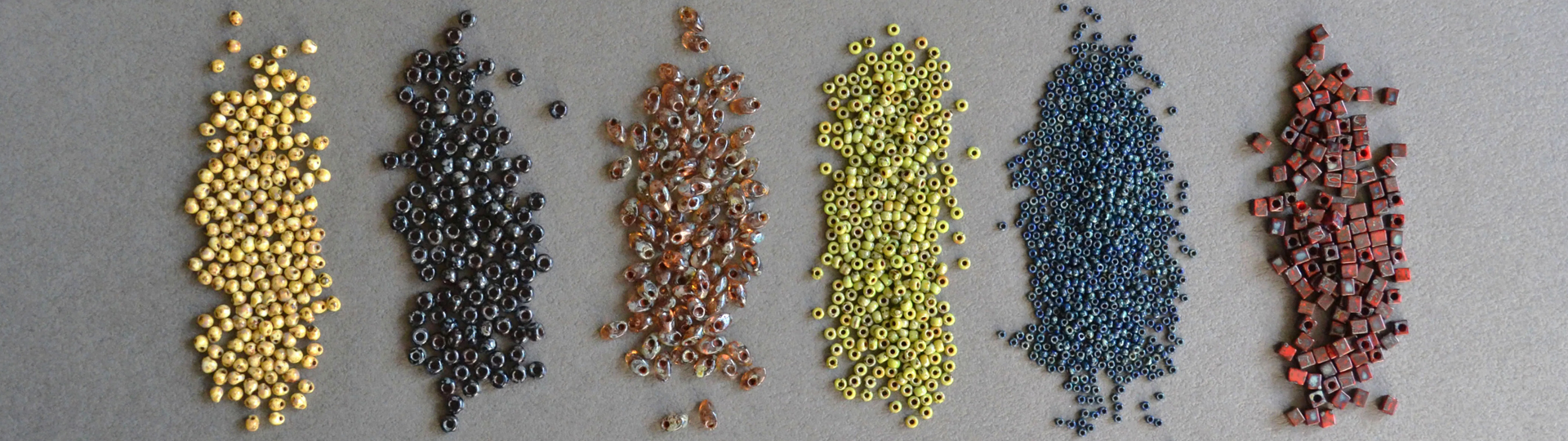
Because they are so uniform in shape and size, Japanese cylinder beads line up in rows with almost no gaps — row by row, bead by bead, with no "waves" or skewing. That's why the vast majority of modern patterns for peyote stitch, brick stitch and loom weaving are designed specifically around Delica dimensions.
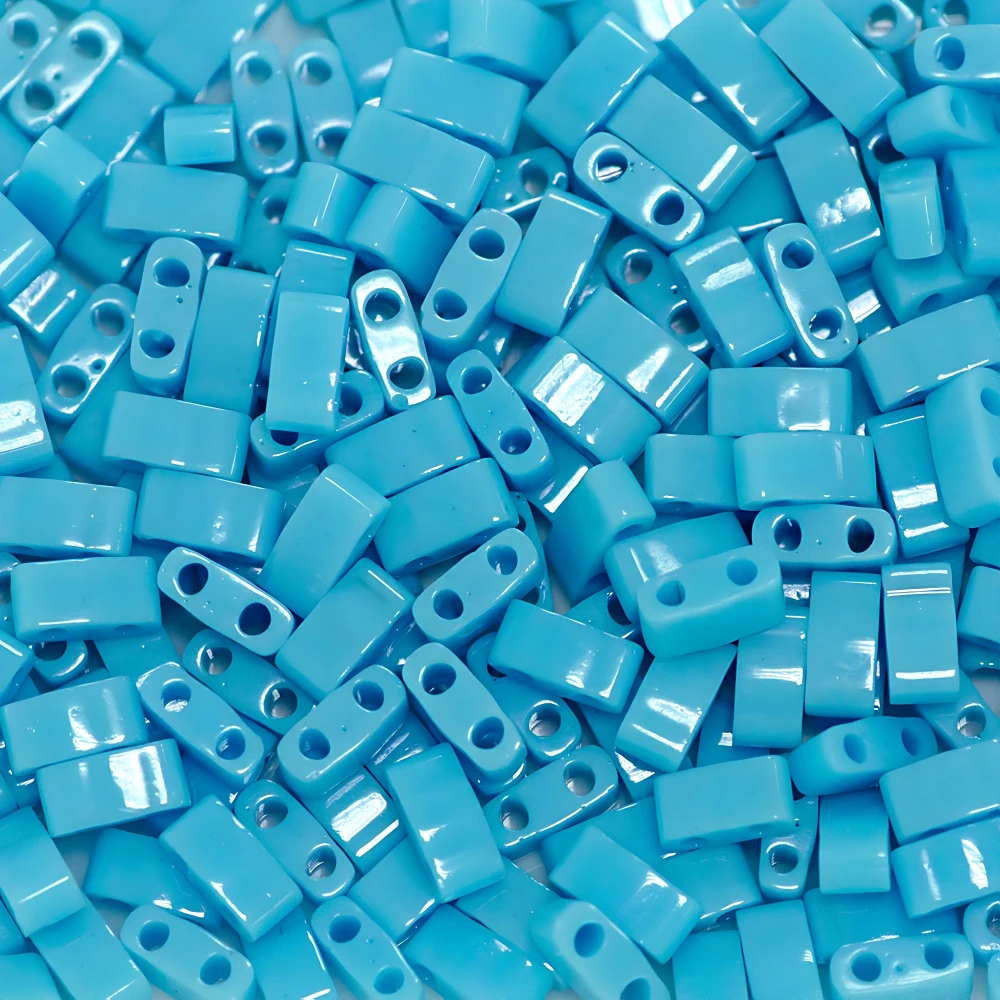
Chinese Seed Beads: A Budget Option with Nuances
Chinese seed beads have a "character" all their own. Because they are mass-produced, they differ noticeably from their European and Japanese counterparts. Their main feature is lower uniformity. Within a single bag, beads may vary slightly in diameter, and their holes aren't always perfectly centred. The dye or galvanized coating can sometimes be sensitive to the environment. Over time, the finish may wear off, especially where it is in constant contact with skin or moisture.
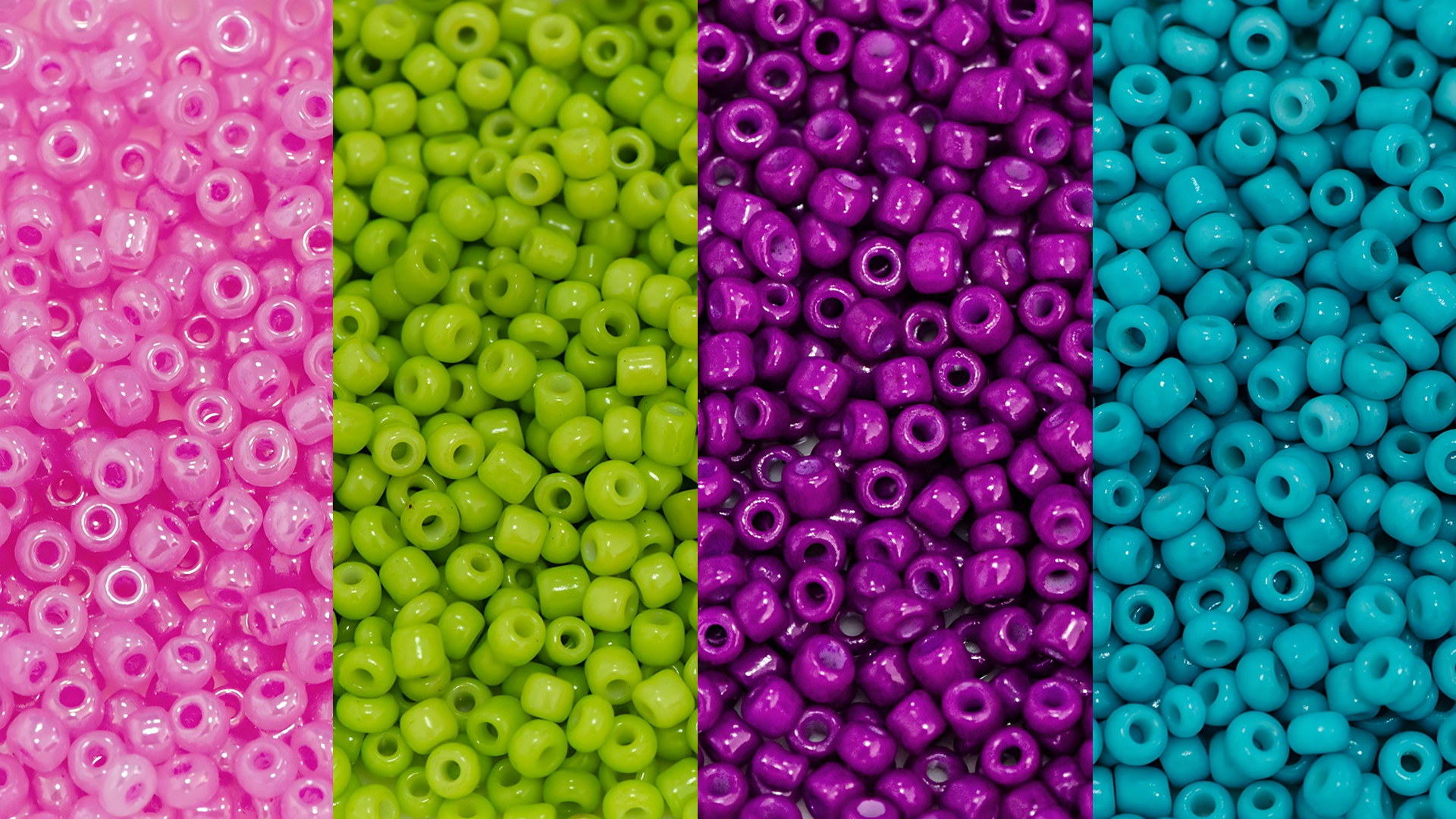
Thanks to their affordability, Chinese seed beads are a great solution for many projects. Don't hesitate to choose them when you're just learning a new technique. They're perfect for stitching your first bracelets and figurines in bulk, for "one-season" accessories that aren't meant for years of everyday wear, and as a background or filler in 3D pieces where the focus is on expensive stones or crystals.
Chopped Bugles and Bugle Beads: What You Should Know
So far, we've mostly talked about round rocailles and Delica cylinder beads. But that's far from the full range of seed beads. MONPACIE offers a wide variety of shapes and types, and two more popular options deserve special attention — chopped bugles and bugle beads.
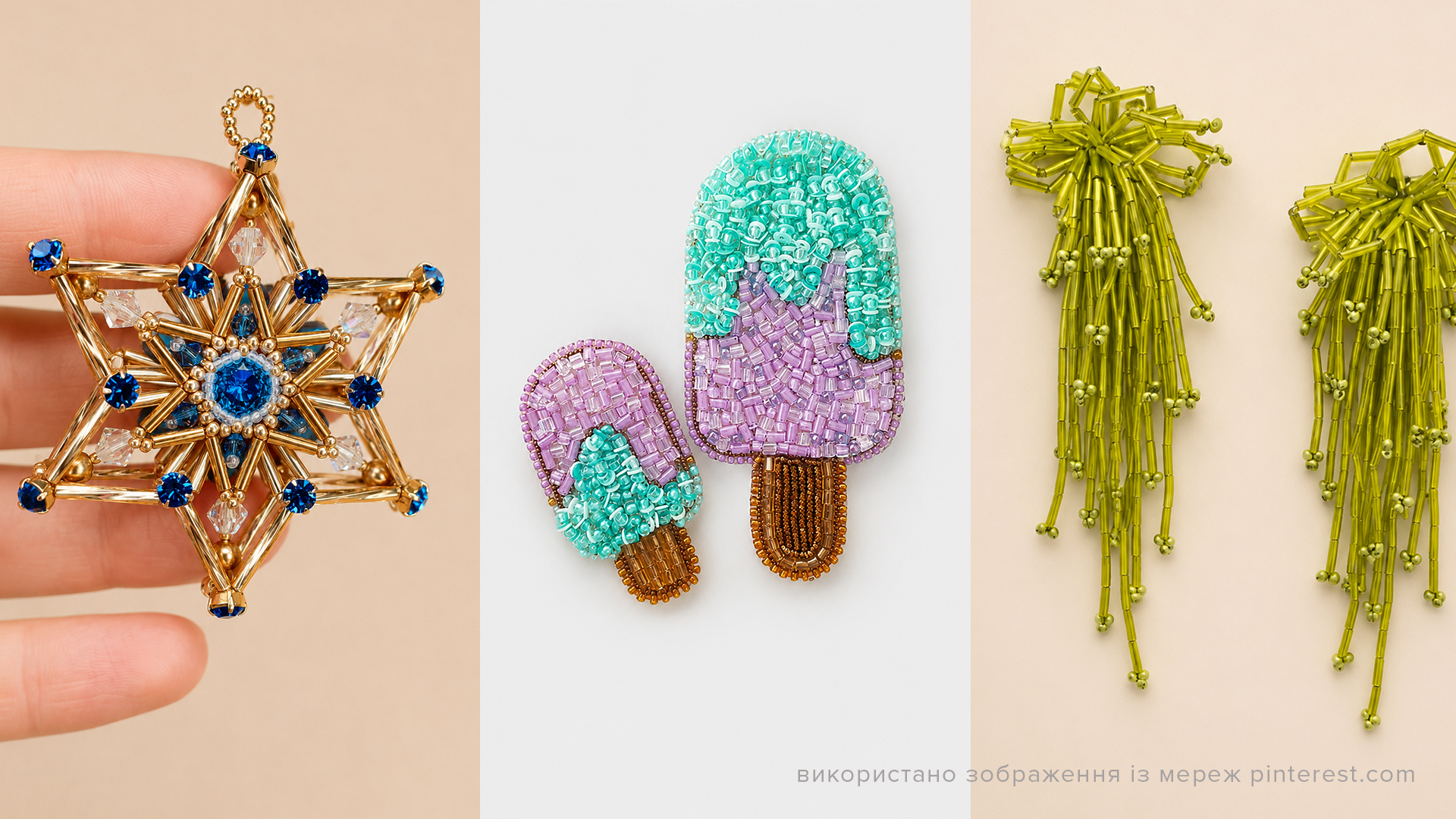
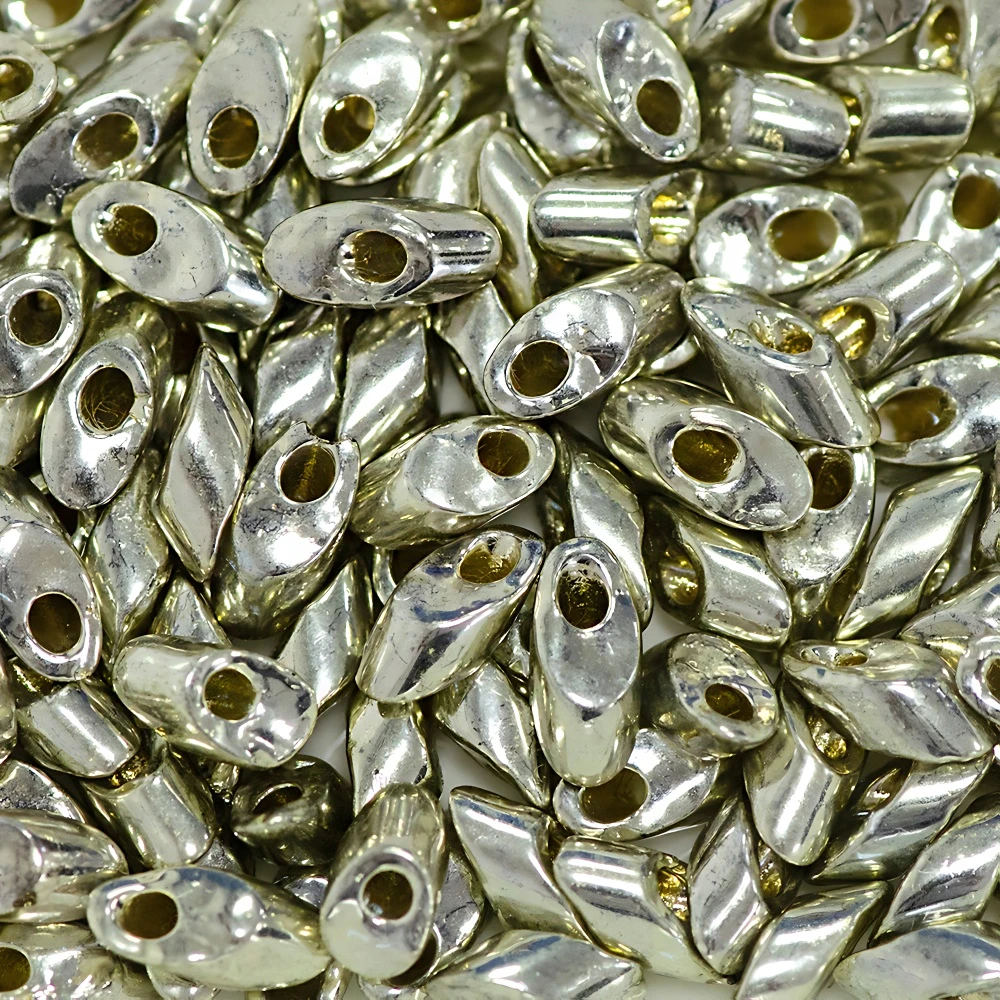
Bugle beads are elongated glass tubes with a hole for stringing, roughly 5 to 30 mm long. Their surface can be smooth, twisted or faceted. The ends are usually fire-polished — meaning they've undergone extra heat treatment, which makes them a little safer to work with.
Chopped bugles are the same cylindrical tubes, but only 1–5 mm long. Unlike bugle beads, their ends are usually simply chopped off without fire-polishing — hence the name. Because of the sharper edges, it's best to work with them using strong, multi-strand thread or wire.
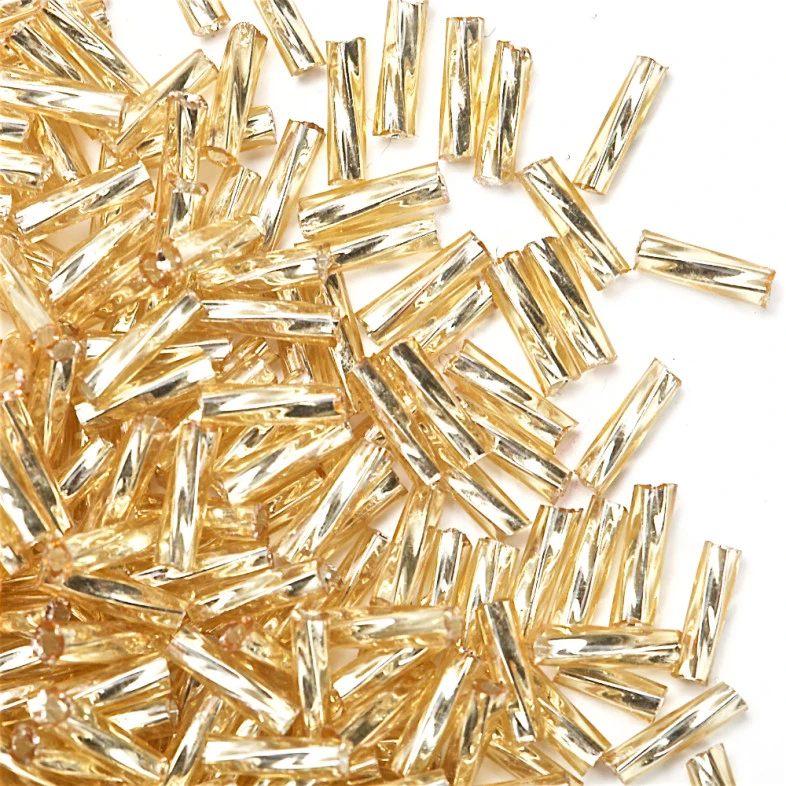
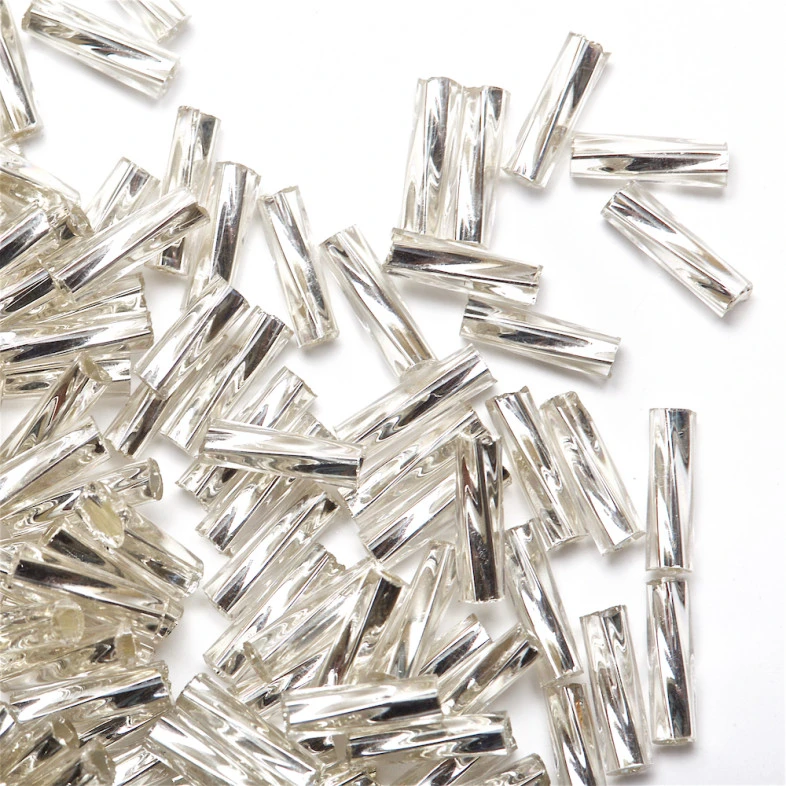
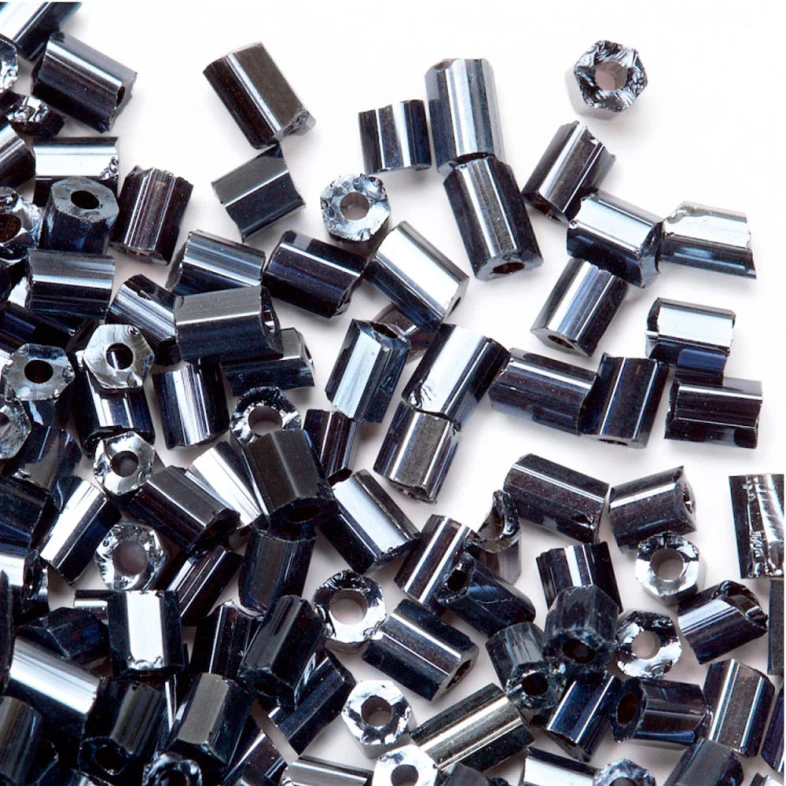
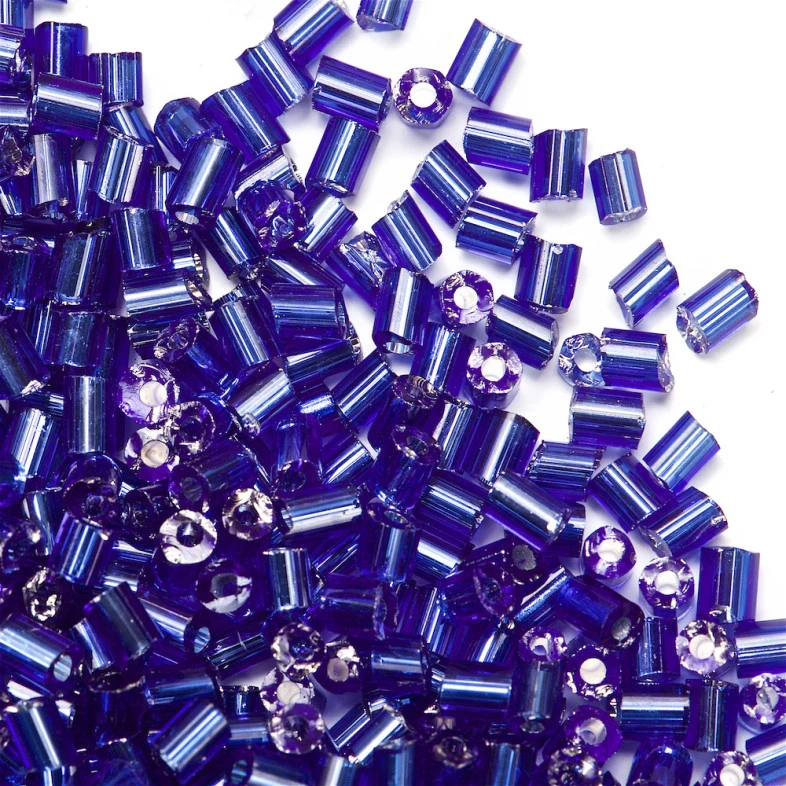
Bugle beads look stunning in fringe, as part of a necklace or earrings, and in embroidery wherever you want the effect of an elongated line or a shimmering "rain". Chopped bugles are more versatile: they're widely used in beaded embroidery pictures, jewellery and especially in beaded flowers, where short faceted tubes imitate leaves or flower stamens.